Sod Installation in East Texas: What Homeowners Need to Know
November 9, 2026
Starting with the Right Assessment
Before a single piece of sod touches the ground, the condition of your yard needs a thorough look. At Precision Lawn Systems LLC, we evaluate three key factors before recommending any grass or beginning any work: sunlight, drainage, and sprinkler coverage.
Sunlight determines which grass varieties will thrive in your yard. Areas with full sun all day have very different needs than spots shaded by trees or structures for several hours. Drainage matters just as much. Soil that holds water too long after rain can suffocate grass roots, while soil that drains too quickly may leave new sod struggling to establish. Finally, sprinkler coverage is reviewed to confirm that every section of the new lawn will receive consistent, even watering during the critical rooting period. Gaps in coverage can cause dry patches that die before the sod ever has a chance to take hold.
Choosing the Right Grass for Your Yard
Yard conditions directly influence which grass is the right fit. One option well-suited to East Texas properties is Palisades Zoysia. This variety is known for its dense, attractive appearance and its ability to tolerate heat, which makes it a practical choice for the warm months common in this region. Palisades Zoysia also performs reasonably well in areas with some shade, though it still prefers good sun exposure. For yards with heavy shade or other specific conditions, a different variety may be a better recommendation. The goal is always to match the grass to the yard, not the other way around.
Removing Old Turf and Preparing the Soil
Once the right grass is selected, the work of preparing the ground begins. Existing turf, weeds, and debris are removed to create a clean slate. Leaving old vegetation in place can lead to uneven surfaces and competing root systems that interfere with new sod establishment.
After the old turf is cleared, the soil is graded and raked to create a smooth, level surface. This step is more important than many homeowners realize. Low spots can collect standing water, and high spots can dry out too quickly. A properly raked and graded surface gives the sod the best possible foundation for making good soil contact across the entire area.
Laying the Sod
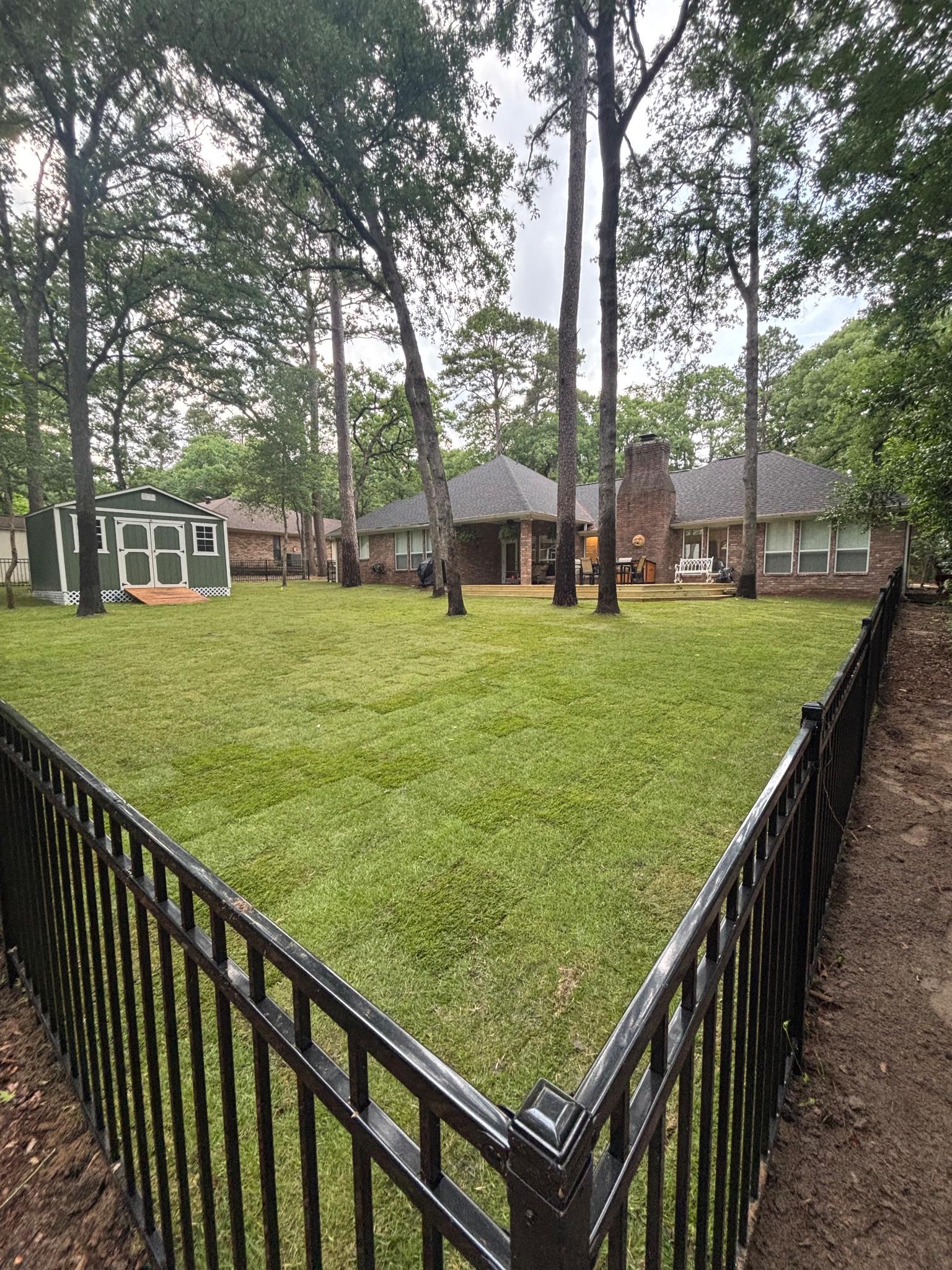
Sod is laid in a staggered, brick-like pattern to minimize visible seams and reduce the chance of edges lifting or drying out. Each piece is pressed firmly against the next to eliminate gaps. Along edges and around curves, pieces are cut to fit cleanly. Tight placement helps the sod knit together as it roots into the soil below.
Watering While Sod Takes Root
Watering is one of the most important parts of a successful sod installation. Immediately after laying, the sod needs enough water to thoroughly moisten both the sod itself and the soil beneath it. During the first week or two, the lawn typically needs to stay consistently moist while roots begin to anchor into the ground. Overwatering can be just as harmful as underwatering, so following a balanced watering schedule is essential. As the sod establishes, watering frequency can gradually be reduced to a normal maintenance routine.
Ready to Get Started?
If you are a homeowner in Hawkins, Holly Lake Ranch, or any of the surrounding East Texas communities and you are ready to explore sod installation for your property, Precision Lawn Systems LLC is here to help. Give us a call at 903.747.7150 to schedule an estimate and talk through the best options for your yard.